Differentiate visceral pleura and parietal pleura.
- Visceral pleura covers the surface of the lungs.
- Parietal pleura lines the inner surface of the chest wall, diaphragm, and mediastinum.
What is the fluid between the two pleura membranes called?
Pleural fluid
Pulmonary surfactant is inside the alveoli to reduce surface tension; pleural fluid is between pleural layers to reduce friction.
What nerve stimulates the diaphragm muscle to contract?
phrenic nerve
Where is the heart located in the thoracic cavity?
mediastinum
Define:
ventilation
It is the physical action of moving air in and out of the lungs.
Define:
oxygenation
It is the loading of oxygen molecules onboard the hemoglobin in the bloodstream.
Define:
respiration
It is the exchange of oxygen and carbon dioxide in the capillaries on the alveoli and other tissues of the body.
(O2), (CO2)
What are the two actions of ventilation?
inhalation and exhalation
Why is it important to create or secure a patent airway for a patient without a gag reflex?
A patient with no gag reflex cannot maintain a patent airway. We must provide a patent airway for oxygenation and possible positive pressure ventilation if needed.
(PPV)
True or False:
There is no difference between internal and external respiration.
False
External respiration is gas exchange between alveoli and pulmonary capillaries.
Internal respiration occurs between systemic capillaries and tissue cells.
What is the term for all of the chemical processes used by cells to sustain life in the absence of oxygen?
anaerobic metabolism
Fill in the blank.
The ________ is the most common airway obstruction.
tongue
True or False:
If the patient has a suspected spinal injury, it is appropriate to use a jaw-thrust maneuver.
True
The head-tilt, chin-lift maneuver may complicate any underlying injuries to the cervical spine.
Describe:
adequate breathing
- a normal respiratory rate (12 to 20 breaths/min)
- a regular pattern of inhalation and exhalation
- lung sounds will be clear and equal bilateral
- equal chest rise and volume
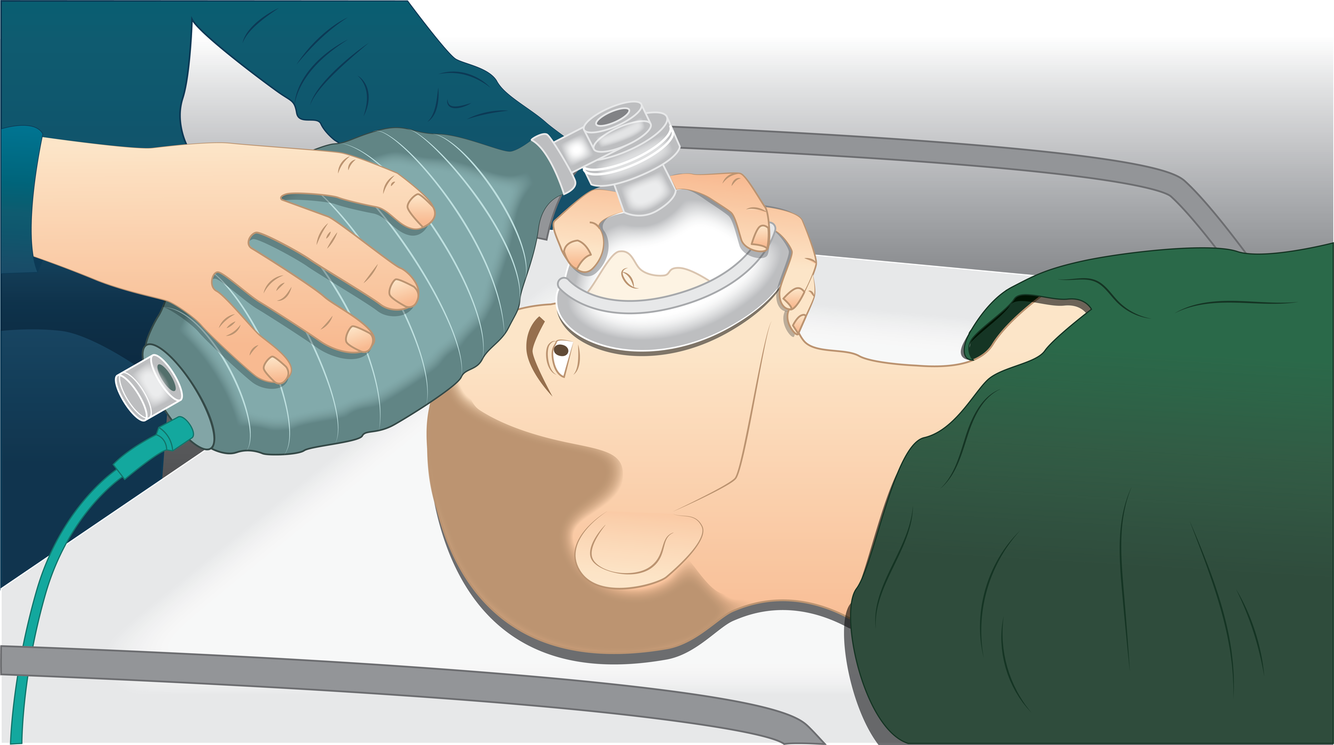
A patient is unconscious, unresponsive, and has snoring respirations at 5 breaths/min. What are the steps for airway and ventilation management?
- Suspect airway obstruction due to tongue and snoring respirations.
- If spinal trauma is suspected, open the airway with a jaw-thrust maneuver while maintaining manual cervical spine precautions.
- If no spinal injury is suspected, use a head-tilt/chin-lift maneuver.
- Suction the airway as needed to clear secretions.
- Measure and insert an oropharyngeal airway (OPA) if the patient has no gag reflex.
- Attach a bag-valve-mask (BVM) with supplemental oxygen at 15 L/min.
- Provide positive pressure ventilations at 1 breath every 5–6 seconds, watching for adequate chest rise.
Describe:
agonal gasps and/or breathing
It is described as intermittent and inadequate gasps.
List the muscles used when the patient is demonstrating labored or difficulty breathing.
Dyspnea
- Sternocleidomastoid
- Pectoralis major
- Intercostals
- Abdominal
What is the breathing pattern called that has irregular pattern(s) with periods of apnea?
Cheyne-Stokes
List the causes of inaccurate pulse oximetry readings.
- nail polish
- carbon monoxide poisoning
- severe distal vasoconstriction (chronic hypoxia, smoking, hypothermia)
- hypovolemia
- dirty fingers/nail beds
Can you think of any more?
Describe:
capnography
It measures end-tidal carbon dioxide and provides a numerical reading and graph of CO2 in the patient’s respirations.
What is the normal capnography mm Hg reading range?
35 to 45 mm Hg
List the types of airway obstruction(s).
- relaxed tongue
- foreign bodies (food, objects, dentures)
- swelling of the airway tissues
- trauma
- emesis/vomiting
Can you think of any more?
What is the concern if we insert the suction catheter too far into the semi-conscious patient’s oropharynx?
- stimulation or triggering of the patient’s gag reflex
- inducing vomiting
When is inserting an oropharyngeal indicated?
(OPA)
In unresponsive patients (breathing or apneic) when their gag reflex is no longer intact.

-
Component 1: Preliminary EMT72
-
Component 2: Patient Assessment63
-
Component 3: Airway Management Techniques and Tools52
-
Component 4: Basic Pharmacology30
-
Component 5: Importance and Pathophysiology of Shock25
-
Component 6: Basic Life Support (CPR) Review31
-
Component 7: Care for the Medical Patient78
-
Component 8: Care for the Trauma Patient73
-
Component 9: Care for Special Patient Populations42
-
Component 10: Additional EMS Functions39


